
As-is sales
Can I sell my Tennessee mobile home park if it needs major repairs or infrastructure work?
Potentially, yes. Infrastructure, utilities, roads, pads and permitting are exactly what serious park buyers underwrite, which means a park with real problems is a familiar property type, not an unsellable one.
Last reviewed: August 26, 2026. Tennessee requirements vary by county, municipality, and utility provider, and they change over time.
This page is general information, not legal, tax, environmental, engineering, accounting, or financial advice. Verify anything that affects a specific property with the county or municipal office, the utility provider, and your own professionals.
Almost every park we look at needs something. The question a buyer asks isn't "is this property in perfect condition." It's "what does it cost to make this property function, how certain is that number and how does that change the price."
You do not have to fix anything before contacting us. In many cases you shouldn't, owners routinely spend money on the wrong items or half-complete a project in a way that makes the remaining cost harder to estimate, not easier.
The situations we see most in Tennessee
Water lines
Old galvanized or early-generation plastic distribution lines, undersized mains, valves that can no longer isolate a section and a master meter that reads far above what the occupied homes should consume. Leaks are the classic hidden expense: they drain NOI monthly and get worse quietly. A buyer will price a replacement or repair program and will usually pay more attention to the water bill trend than to a plumber's opinion.
Sewer, septic and lagoons
Private treatment is common in rural and small-town Tennessee and it's the item that most often determines whether a park is a straightforward acquisition or a specialist project. Individual septic systems at their design capacity, drain fields near the end of their life, lagoons with permitting or monitoring history and grinder or lift stations all get looked at closely. Occasionally the best answer for a park is connection to a municipal system, an expensive project that can also unlock significant value.
Roads
Gravel that has migrated, asphalt at the end of its life, drainage that sends water where nobody wants it. Roads rarely stop a transaction; they change the capital budget and therefore the price.
Electrical infrastructure
Pedestals sized for homes built decades ago, exposed or damaged service equipment and pads where the available amperage won't support a modern home. This one matters most for parks with vacant pads, because it determines whether a pad is fillable or needs an electrical project first.
Vacant pads that aren't really ready
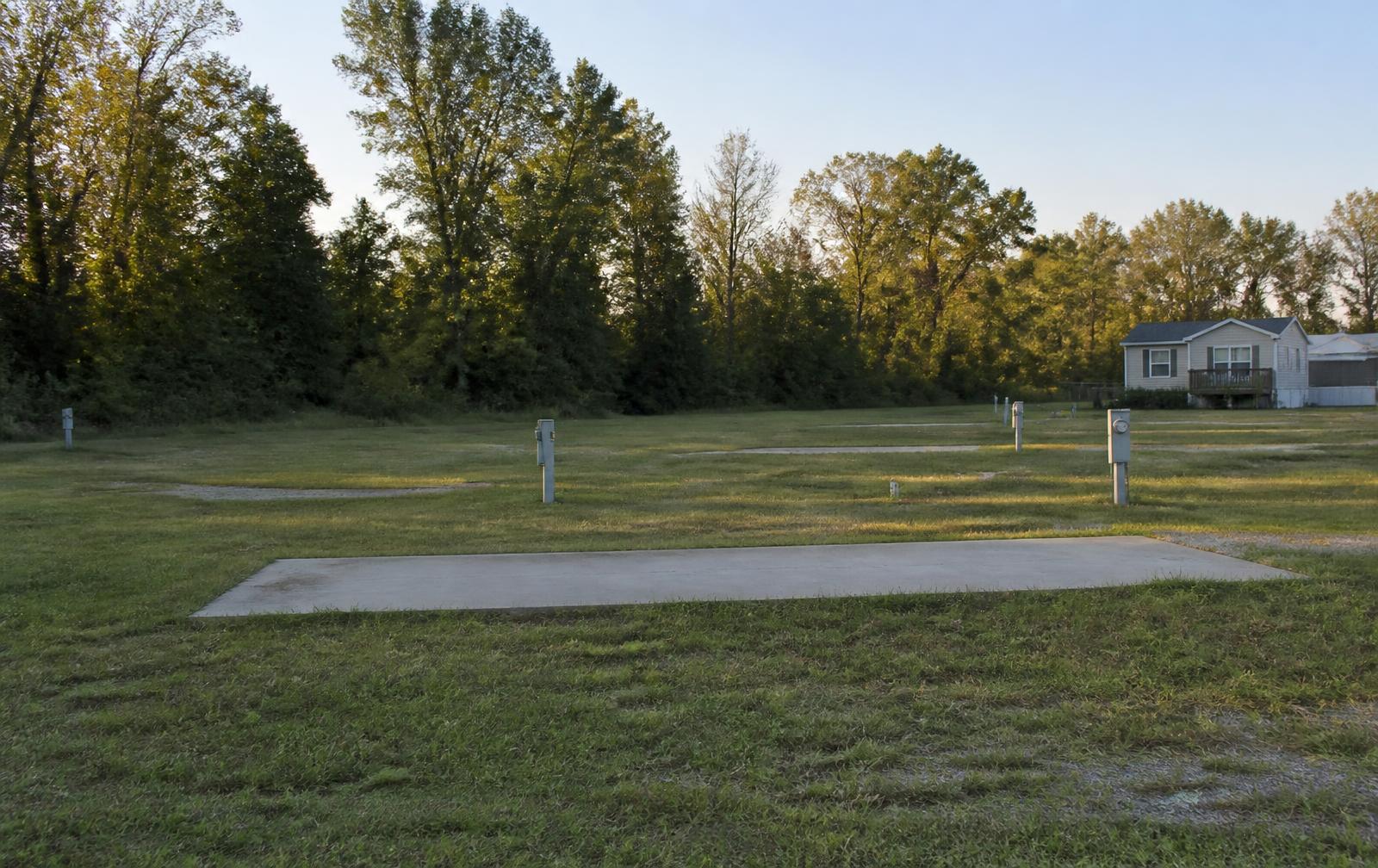
A pad counts as inventory only if a home can be set on it and connected. Overgrown sites, missing utility stubs, undersized pads and access that a transport truck can't manage all turn "vacant pad" into "future pad." We ask about this early because it separates real near-term upside from a longer-term project.
Abandoned and derelict homes
Homes that residents walked away from, homes with unclear titles, homes too far gone to rehab. Removal and disposal cost real money and title cleanup takes time. It's a known workflow. Tell us how many there are and roughly what shape they're in.
Deferred maintenance and older park-owned homes
Roofs, floors, HVAC, skirting, steps and decks across a fleet of aging park-owned homes add up faster than most owners expect. If the park's income depends heavily on renting homes that need work, that shows up in how the income is valued, not in whether the park is sellable.
Cleanup, management and the human side
Junk on lots, inoperable vehicles, a resident base that stopped believing rules would be enforced and an owner who is simply tired. These are among the most common reasons Tennessee owners call and they're also among the most fixable, usually with consistent management rather than capital.
Code and zoning questions
Open code violations, a nonconforming use nobody has documented in decades, pads added over the years without permits or a county that has changed its rules since the park was built. These are diligence items with real answers. They're a reason to disclose early, not a reason to stay quiet.
How condition problems change a transaction
Condition usually affects three things: the price, the structure and the timeline.
- Price, capital needs get subtracted from value, with a margin for uncertainty. Firm quotes shrink that margin.
- Structure, a property that a bank won't lend on today is often better suited to a cash purchase, seller financing, a partnership or a staged approach. This is the most common reason a park sells with creative terms rather than a conventional loan.
- Timeline, utility and permitting questions take time to answer. Knowing about them up front usually shortens the process rather than lengthening it.
What to send us about a park that needs work
- What you know is broken and what you suspect is broken.
- Any contractor quotes, engineering reports or inspection notes you have.
- Twelve months of water bills if the park is master-metered.
- How many vacant pads could take a home this month with no additional work.
- How many park-owned homes are vacant and roughly what shape they're in.
- Any open code, permit or utility issues you're aware of.
If a piece of that is unknown, say so. "Unknown" is a normal answer in this asset class, and we would rather underwrite an honest unknown than a confident guess.
Let us look at the property as it sits today.
No repairs, no cleanup, no pre-sale project. Send the park in its current condition and we'll tell you what we see.
SUBMIT MY PARK AS-ISNo obligation. Partial information is fine, send what you know.